
Complex Trauma: What Therapists Need to Know About Working With Complex Trauma
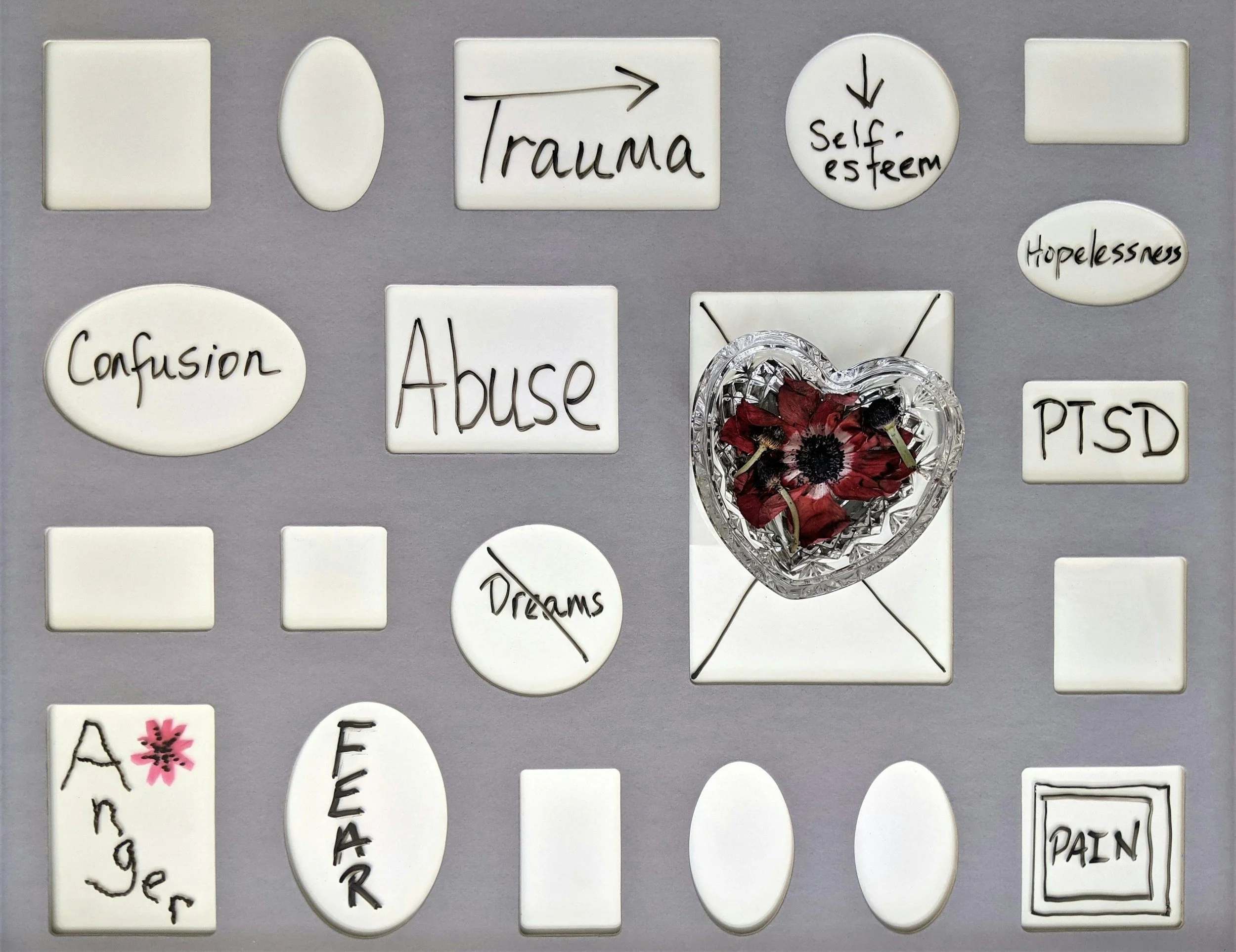
Complex trauma can be one of the most challenging clinical presentations to understand. Not because clients with complex trauma are impossible to treat, but because there is rarely just one thing going on.
A client may come to therapy for anxiety, perfectionism, relationship problems, panic, dissociation, eating concerns, chronic shame, or difficulty regulating emotions.
They may not even identify their history as traumatic. In fact, they usually don’t. These are the clients that will say their childhood was “fine” or “normal” and scoff when you ask them if they have a history of trauma. Or they come in saying they don’t remember anything about their childhood.
And yet, when you look at the bigger picture, you may begin to see a pattern: repeated experiences of unpredictability, neglect, abuse, relational rupture, emotional invalidation, or having to adapt to an environment that didn't consistently feel safe.
That is where understanding complex trauma becomes particularly important for therapists.
And you don't have to be an EMDR therapist to benefit from understanding it.
The principles of working with complex trauma can inform therapy across modalities, whether you practice EMDR, IFS, CBT, ACT, somatic therapy, attachment-based therapy, or another approach.
What Is Complex Trauma?
Complex trauma generally refers to the effects of repeated or prolonged traumatic experiences, particularly experiences that occur within relationships or during childhood and other important developmental periods.
This might include:
Childhood abuse or neglect
Chronic emotional invalidation
Domestic violence
Unpredictable or frightening caregiving
Repeated abandonment or betrayal
Bullying or ongoing interpersonal trauma
Parentification or taking on adult responsibilities too early
Chronic exposure to conflict or instability
Repeated relational ruptures
Experiences in which a person had little ability to escape or change the situation
The important piece isn't simply the number of traumatic events.
It's the pattern, context, developmental impact, and adaptations that developed around those experiences.
Complex Trauma Isn't Just "More Trauma"
It's tempting to think of complex trauma as simply having experienced multiple traumatic events.
But clinically, the picture is more complicated.
Repeated trauma can affect the development of:
Emotional regulation
Attachment
Sense of self
Boundaries
Trust
Body awareness
Ability to identify emotions
Expectations of relationships
Capacity to experience safety
Strategies for managing distress
A client may not walk into your office saying, "I have complex trauma."
Instead, you might hear:
"I don't know why I can't relax."
"I know they're not mad at me, but I can't stop worrying that they are."
"I feel guilty saying no."
"I understand why I do this, but I can't stop doing it."
"I don't really remember much about my childhood."
"Everything is fine. I just feel like something is wrong with me."
Those statements can provide important clinical information.
The Client's Symptoms May Not Be the Whole Story
One of the biggest shifts in working with complex trauma is moving beyond the question:
"What's wrong with this client?"
and becoming curious about:
"What happened, and what did this person have to learn to do in response?"
For example, what looks like:
People-pleasing may have developed as a way of maintaining connection.
Hypervigilance may have developed because unpredictability was dangerous.
Perfectionism may have reduced the risk of criticism.
Emotional suppression may have helped the person avoid overwhelming conflict.
Avoidance may have protected them from experiences that felt unmanageable.
Dissociation may have provided distance from overwhelming experiences.
Overfunctioning may have created a sense of control.
This doesn't mean every symptom is caused by trauma.
It means that function matters.
Before trying to eliminate a behavior, it is imperative to understand what purpose it has served.
Complex Trauma and the Nervous System
Clients with complex trauma may have difficulty experiencing safety even when there is no immediate danger.
Their nervous system may be responding to cues that remind them—consciously or unconsciously—of previous experiences.
This can show up as:
Hypervigilance
Anxiety
Irritability
Shutdown
Emotional numbness
Difficulty concentrating
Feeling overwhelmed
Difficulty sleeping
Somatic tension
Feeling disconnected from the body
The client may intellectually understand that they're safe.
Their body just didn’t get the message.
For therapists, this creates an important clinical question:
Does this client need more insight—or do they need more capacity to experience safety and regulation?
Sometimes the answer is both. But let’s be real.. it’s usually not more insight they need.
Complex Trauma and Dissociation
Dissociation deserves particular attention when working with complex trauma.
Dissociation exists on a spectrum. Everyone dissociates.
A client might describe:
"Checking out"
Feeling emotionally numb
Losing track of time
Feeling disconnected from their body
Feeling like they're watching themselves from the outside
Having difficulty accessing emotions
Experiencing significant gaps in memory
Not every experience of zoning out is dissociation, and dissociation can have many causes.
But when dissociative responses are present, they can significantly affect treatment pacing and how a therapist approaches trauma processing.
This is particularly relevant for EMDR therapists.
More processing isn't always better processing.
The clinical work needs to focus on stabilization, orientation, resourcing, increasing present-moment awareness, or helping the client develop greater access to internal experiences before moving deeper into traumatic material. Even if you don’t use EMDR, we still need to respect and honor the triphasic approach to treating trauma, developed by Dr. Judith Herman.
Why Complex Trauma Can Be Challenging in EMDR
EMDR can be highly useful when working with complex trauma, but complex cases don't always fit neatly into a straightforward target sequence.
A client may have:
Multiple target clusters
Repeated interpersonal trauma
Developmental trauma
Significant dissociation
Limited access to adaptive information
Strong protective responses
Multiple interconnected negative beliefs
Difficulty identifying specific memories
Current triggers that connect to several earlier experiences
This is where case conceptualization becomes especially important.
Rather than asking only:
"What's the worst memory?"
you may need to consider:
What are the major target clusters?
What current situations activate the client?
What earlier experiences may be connected?
What negative beliefs organize the client's experience?
What protective responses are showing up?
How much access does the client have to internal and external resources?
Is the client sufficiently oriented to the present?
What happens when we get close to traumatic material?
Complex trauma often requires us to think in patterns and networks rather than isolated memories.
You Don't Have to Be an EMDR Therapist to Use This Framework
Understanding complex trauma can make you a more trauma-informed therapist regardless of your primary modality.
For example, if you're a CBT therapist, you may become more curious about the function of a client's avoidance rather than immediately targeting it.
If you're an IFS therapist, you may notice how protective parts developed in response to earlier experiences.
If you're a somatic therapist, you may pay closer attention to how safety and threat show up in the body.
If you're an attachment-focused therapist, you may explore how earlier relational experiences influence current expectations of connection.
And if you're an EMDR therapist, you may use these observations to inform case conceptualization, target selection, preparation, and processing.
The modality may differ.
The underlying clinical curiosity can remain.
Insight Isn't the Same as Integration
Complex trauma clients are often incredibly insightful.
They may know exactly why they struggle.
They may be able to tell you:
"I know this comes from my childhood."
"I know my mother was emotionally unavailable."
"I know I'm afraid of rejection."
"I know I don't have to be perfect."
And yet they still feel terrified when someone is disappointed in them.
This is an important clinical distinction.
Knowing something intellectually doesn't necessarily mean the nervous system, emotions, body, and relational patterns have integrated that knowledge.
That is one reason trauma treatment often involves more than insight.
The goal isn't simply for the client to understand their history.
It's to help them update their nervous system, their bodies, and their relationships with adaptive information and to metabolize the distress and “yuck” (to quote Rebecca Kase) of maladaptive beliefs and traumatic events.
What Therapists Can Watch For
When you're wondering whether complex trauma may be part of the clinical picture, consider looking for patterns rather than a single symptom.
Some areas to explore include:
Relationships
Does the client struggle with trust, abandonment fears, boundaries, conflict, or intimacy?
Emotional Regulation
Do emotions feel overwhelming, inaccessible, unpredictable, or unsafe?
Self-Concept
Does the client experience chronic shame, defectiveness, guilt, or a sense that they are fundamentally "too much" or "not enough"? This is almost a guarantee you’re looking at complex trauma.
Body Awareness
Can the client identify physical sensations, needs, hunger, fatigue, tension, or signs of stress?
Protective Strategies
What does the client do when they feel threatened?
Do they fight, flee, freeze, fawn, shut down, overfunction, intellectualize, control, avoid, or disconnect?
Present-Day Triggers
What situations reliably activate the client?
And do those triggers seem connected to earlier relational or traumatic experiences?
Dissociation
Does the client become disconnected, numb, foggy, absent, or significantly less emotionally available when difficult material emerges?
These aren't diagnostic questions by themselves.
They're invitations to become more curious about the client's system.
The Goal Isn't to Find Trauma Everywhere
Trauma-informed practice doesn't mean assuming every symptom is trauma.
It also doesn't mean turning every childhood difficulty into a traumatic event.
Good case conceptualization requires nuance. Remember nuance friends?
Clients have multiple influences on their experiences, including temperament, biology, relationships, culture, current circumstances, neurodivergence, medical factors, and other mental health conditions.
The goal is not to force a trauma explanation onto a client.
It's to recognize when trauma may be clinically relevant and respond accordingly.
Working With Complex Trauma Requires Flexibility
One of the biggest lessons complex trauma teaches us is that there isn't one perfect sequence for every client. Healing is not linear.
Some clients need more preparation.
Some need more stabilization.
Some need help developing emotional awareness.
Some need to work with protective responses before approaching traumatic memories.
Some can move relatively quickly into processing.
And some need a slower, more relational approach.
This doesn't mean therapy is "off track."
Sometimes adapting the treatment is exactly what good trauma therapy looks like.
For EMDR Therapists: Think Beyond the Target
When working with complex trauma, it can be helpful to zoom out.
Instead of thinking only about:
"What memory are we processing?"
also consider:
"What system are we working with?"
What does this client do when they feel vulnerable?
What beliefs organize their experience?
What happens when they begin to feel safe?
What happens when they don't?
What protective strategies appear?
What does their nervous system do?
What happens relationally between therapist and client?
And perhaps most importantly:
What does this client need in order for processing to be useful rather than overwhelming?
That shift can make complex cases feel much more understandable.
Complex Trauma Doesn't Mean a Client Is "Too Complex"
Sometimes therapists see a client with multiple trauma histories, dissociation, relationship difficulties, and significant emotional dysregulation and immediately think:
"This case is way over my head."
That reaction is understandable.
Complex trauma can challenge even experienced clinicians.
But complexity doesn't necessarily mean the client is unworkable.
It often means we need to slow down, get curious, strengthen our conceptualization, and resist the pressure to have everything figured out immediately.
You don't need to know exactly what to do with every piece of the case before you begin.
You need a framework that helps you understand what you're seeing.
And you need enough flexibility to adjust as you learn more.
Learning to Feel More Confident With Complex Trauma Cases
At EMDR Confidence Lab, we believe therapists shouldn't have to choose between "I know the protocol" and "I have no idea what I'm doing."
Complex trauma requires more than memorizing steps.
It requires clinical reasoning, curiosity, case conceptualization, flexibility, and the ability to recognize when a client needs something different from what you initially expected.
That's true whether you're an experienced EMDR therapist, newly learning EMDR, or a therapist practicing entirely outside of EMDR.
The more clearly you can understand the why behind a client's patterns, the easier it becomes to make thoughtful clinical decisions about the how.
And sometimes confidence doesn't come from knowing exactly what to do.
It comes from knowing how to think through what you're seeing.
Join Us for Training
Our trainings focus on the clinical thinking that happens behind the EMDR protocol.
Our Complex Trauma and Dissociation training is a chance to take some of the ideas we talked about here and really dig into how conceptualization changes as cases become more complex. And this one… not just for EMDR therapists. Even if you don’t use EMDR you will still walk away with new knowledge.
And the best part? Our trainings are FREE.
Bring Your Cases to Consultation
Because sometimes learning about conceptualization isn't enough.
You also need a place to say:
“Here's what's happening with my client. Here's what I've tried. And now I'm stuck.”
That's what our Drop-In EMDR Consultation Group is for.
Bring the complicated case. The stuck processing. The target you're questioning. The interweave you're unsure about. The client who isn't responding the way you expected.
You don't have to have your question perfectly figured out before you come.
And because I want consultation to be accessible to EMDR therapists at different stages of their careers, the Drop-In Consultation Group uses tiered pricing: $15, $35, or $50.
Same group. Same consultation. You choose the tier that works for you.
Whether you want to deepen your EMDR knowledge through training, get support with your actual cases through consultation, or do both, the goal is the same:
To help you feel more confident thinking clinically—not just following the protocol.
Confidence Happens in the Lab.
Frequently Asked Questions Complex Trauma
What is complex trauma?
Complex trauma refers to the effects of repeated, prolonged, or relational traumatic experiences, particularly when they occur during childhood or other important developmental periods.
How is complex trauma different from PTSD?
PTSD can develop after a traumatic event and involves a specific cluster of symptoms. Complex trauma describes a broader pattern of effects associated with prolonged or repeated trauma, particularly developmental and relational trauma. The concepts overlap but are not interchangeable. In fact, many clients have been previously diagnosed with Bipolar Disorder and Borderline Personality Disorder.
Can EMDR help with complex trauma?
EMDR can be used with clients who have complex trauma, but treatment may require careful case conceptualization, preparation, pacing, attention to dissociation, and adaptation to the client's needs.
Can non-EMDR therapists use a complex trauma framework?
Yes. Understanding complex trauma can inform clinical work across many modalities, including CBT, ACT, IFS, somatic approaches, attachment-based therapy, psychodynamic therapy, and others.
What are common signs of complex trauma in therapy?
Clients may present with anxiety, emotional dysregulation, chronic shame, perfectionism, people-pleasing, relationship difficulties, difficulty with boundaries, hypervigilance, dissociation, emotional numbness, or difficulty feeling safe.
Does every difficult childhood experience cause complex trauma?
No. Trauma should not be assumed simply because someone experienced adversity. A thoughtful clinical assessment considers the person's experiences, responses, context, development, current functioning, and other relevant factors.
What is the biggest challenge when treating complex trauma?
Complex trauma often involves multiple interconnected patterns rather than one isolated traumatic memory. Therapists may need to consider target clusters, protective strategies, dissociation, attachment, emotional regulation, current triggers, and the client's capacity for processing.
Ready to Build Confidence That Feels Grounded?
EMDR Confidence Lab is consultation for trauma therapists who want:
✓ clinical clarity
✓ nuanced case conceptualization
✓ support with stuck processing
✓ confidence with dissociation and attachment work
✓ thoughtful, relational consultation
✓ real skill development, not rote protocol